
6 Simple Home Rituals to Boost Your Well-Being
sharing is caring :)
Disclaimer: Je’Ana C. curates the Shades of Tatiana product selections. We only recommend products we genuinely love. If you buy something through our affiliate links, we may earn a small commission at no cost to you.
Home is where so much of everyday life happens. It's where you wake up, unwind after a long day, prepare meals, catch up on chores, spend time with the people you love, and, for many of us, sometimes work too. With so much happening in one place, it's easy for home to start feeling less like a retreat and more like another space filled with responsibilities.
The good news is that creating a calmer home doesn't necessarily require redecorating every room, buying expensive wellness products, or completely changing your schedule. Sometimes it's the smallest routines that make the biggest difference. Opening the curtains first thing in the morning, making yourself a cup of tea before bed, putting your phone away during dinner, or spending ten minutes resetting your living room can become little signals throughout the day that it's time to slow down, shift your attention, or simply take care of yourself.
The best rituals are also the ones that realistically fit into your life. You don't need a two-hour morning routine or a perfectly organized home to benefit from creating a few intentional moments in your day. If you want your home to feel a little more peaceful and restorative, here are six simple rituals worth trying.
RELATED ARTICLE: How to Manage Stress Naturally and Boost Your Energy
Wellness Rituals to Make Your Home Feel More Relaxing
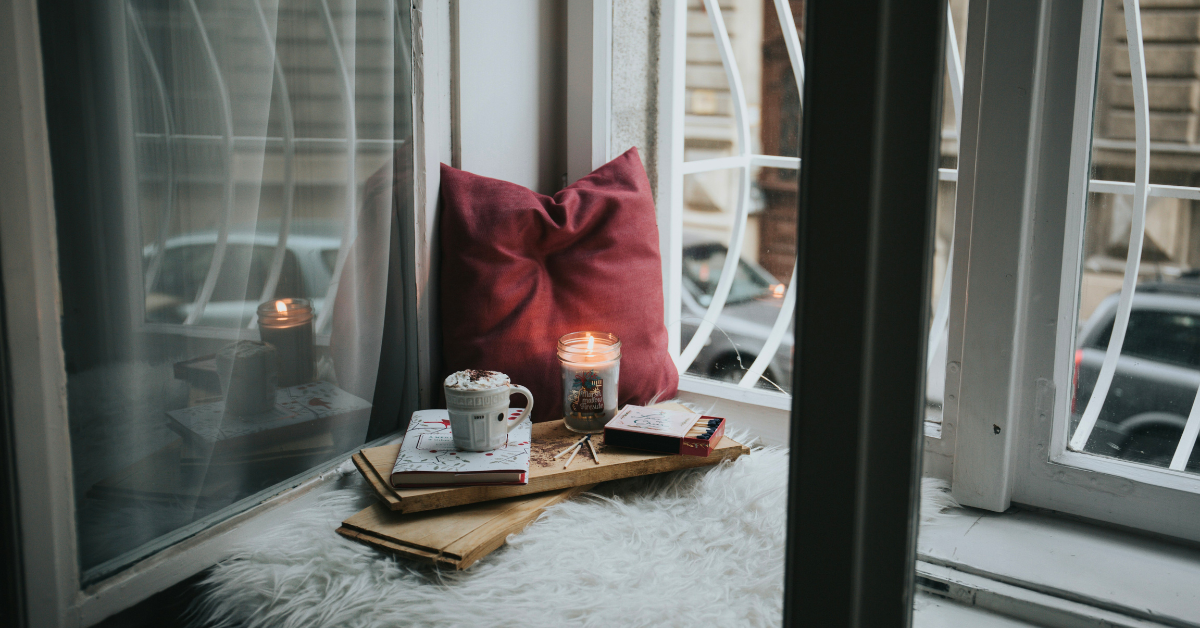
Photo by Alisa Anton on Unsplash
01) Start Your Day Mindfully
The first few minutes after waking up can disappear surprisingly quickly. You reach for your phone to check the time, notice a notification, open an email, scroll through social media, and suddenly your mind is already processing everything happening outside your home before you've even gotten out of bed.
Instead, try creating a small morning ritual that belongs entirely to you. It doesn't have to be complicated or particularly long. There are plenty of simple rituals to start your day that you can adapt to your own schedule, such as:
Drinking a glass of water
Stretching for five minutes
Making coffee or tea without checking your phone
Writing a few lines in a journal
Sitting quietly for a few minutes
Reading a few pages of a book
Writing down your priorities for the day
Stepping outside for a little fresh air
You could also choose one simple intention for the day. Maybe you want to be more patient, finish one task you've been avoiding, take more breaks from your screen, or move through the day without rushing everything. The goal isn't to create the perfect morning routine. It's to give yourself a small transition between waking up and immediately being pulled into everything the day expects from you.
02) Create a Relaxation Nook
You don't need an entire spare room to create somewhere peaceful in your home. A small corner can be enough. Choose a spot in your bedroom, living room, office, or another quiet area and intentionally make it somewhere you associate with slowing down rather than working or completing chores.
Start with whatever makes the space physically comfortable. That could be a cozy armchair, floor cushion, small loveseat, or yoga mat. Add a blanket, a couple of pillows, and a small surface for a book, journal, cup of tea, or anything else you tend to reach for when you're relaxing.
Lighting can completely change the atmosphere too. Instead of relying on bright overhead lighting, use a table lamp, floor lamp, candles where appropriate, or another softer light source. If you enjoy a warm, decorative look, a Himalayan salt lamp for home spaces can also provide a soft glow. Think of it as an ambient lighting choice rather than something your relaxation nook needs.
Then decide what you won't do in this space. Maybe laptops stay away. Maybe you don't fold laundry there. Perhaps scrolling through work email is off-limits. Giving the area a specific purpose can make simply sitting there feel like a small cue that you're allowed to stop being productive for a while.
03) Create a Gentle Evening Wind-Down Routine
Most of us don't move instantly from "busy day" to "ready for bed." Your mind may still be thinking about unfinished work, tomorrow's schedule, something someone said earlier, or the dozen little things you don't want to forget. That's where an evening ritual can help.
Instead of treating bedtime as the moment when you finally stop doing things, create a transition period beforehand. Try several evening rituals to calm your mind until you find a combination that feels natural. For example, you might:
Lower the lights around your home
Change into comfortable clothes
Take a warm shower or bath
Make a caffeine-free drink
Read a physical book
Write tomorrow's priorities down
Journal for a few minutes
Do gentle stretching
Put your phone on Do Not Disturb
You don't need to do all of them. In fact, an elaborate nighttime checklist can quickly turn relaxation into another obligation. Choose two or three things you genuinely enjoy and repeat them often enough that they start becoming familiar signals that the busy part of your day is over.
More in Wellness:





04) Incorporate Natural Light
One of the easiest home rituals requires almost no effort: open the curtains. Natural light helps connect your indoor routine with what's happening outside and can make your home feel brighter and more inviting during the day. Make opening your curtains or blinds part of your mindful morning routine. Instead of leaving rooms dark and immediately reaching for artificial light, let daylight in where it's available.
You can also think about how your furniture interacts with the windows in your home. If you work remotely, could you move your desk closer to natural light? Is a large piece of furniture unnecessarily blocking part of a window? Could a mirror help reflect daylight into a darker section of the room?
Even your favorite morning spot can be intentional. Maybe you drink your coffee beside a window rather than at your desk. Perhaps you open the curtains while you're making breakfast and spend a few minutes noticing the weather before starting your day. These are incredibly small changes, but that's exactly what makes them easy to maintain.
05) Practice Digital Detox
Technology is woven into almost every part of modern life, which means completely disconnecting isn't realistic for most people. But being constantly reachable isn't necessary either. Instead of attempting a dramatic digital detox, start by setting a few boundaries at home. You might make the dining table a phone-free area so meals become a chance to actually eat and talk without automatically checking notifications.
The bedroom could become another boundary. Maybe your phone charges across the room instead of beside your pillow, or you stop answering work emails after a certain hour. You could also create a short screen-free window each evening. Start with thirty minutes before bed. Use that time to shower, read, stretch, prepare for tomorrow, talk with someone, or do something that doesn't require another screen.
Small boundaries like these can become meaningful daily rituals because they help you decide when technology deserves your attention, rather than letting every notification decide for you. The goal isn't to treat your devices as the enemy. It's to make sure there are still parts of your home and day where your attention belongs to you.
06) End the Day With a 10-Minute Home Reset
Sometimes it's difficult to relax when everything around you feels unfinished. That doesn't mean you need to deep-clean your house every night. Instead, try a ten-minute reset. Set a timer and focus only on the little things that will make tomorrow's version of your home feel easier to walk into.
That might mean:
Putting dishes in the dishwasher
Clearing the kitchen counter
Folding the blanket on the sofa
Returning random items to their rooms
Wiping down the bathroom counter
Preparing the coffee maker
Filling your water bottle
Setting out tomorrow's clothes
Clearing your workspace when you're finished for the day
Stop when the timer ends. The point isn't to make everything spotless. You're simply closing out the day and removing a few visual distractions that might otherwise greet you first thing in the morning. This ritual can be particularly helpful if you work from home. Putting your laptop away, closing notebooks, and resetting your workspace creates a physical ending to the workday instead of letting your office slowly spill into the rest of your evening.
You can even make the reset enjoyable. Put on one or two favorite songs, light a candle afterward, or treat making your evening tea as the signal that you're officially done. A calmer home doesn't have to come from hours of cleaning. Sometimes ten intentional minutes is plenty.
Takeaway
Creating a home that supports your well-being isn't about turning every part of your day into a carefully optimized routine. It's about noticing the small moments when you could make life feel a little calmer. Maybe that means waiting fifteen minutes before checking your phone in the morning. Maybe it's creating one chair where you go to read instead of work. It could be opening the curtains while you make coffee, resetting your kitchen before bed, or finally setting a boundary around when you stop answering notifications.
Start with one ritual rather than trying to adopt all six at once. Choose something small enough to repeat, then notice how it changes the way you experience your home and your day. Over time, those ordinary habits can become some of the most comforting parts of your routine.
Your home doesn't have to look like a perfectly styled wellness retreat to feel restorative. It simply needs to include a few spaces and moments that remind you to slow down and actually enjoy being there.
What's one small ritual that instantly makes your home feel a little more peaceful?









Learn how newer approaches to appetite and weight management are changing the conversation around hunger, metabolism, GLP-1 medications, and the brain-gut connection. Understanding the science, benefits, limitations, and safety considerations can help you have a more informed conversation with your healthcare provider about your options.